Best Water Filter Faucet vs Pitcher: Top Picks for Clean Tap Water
Answering the question which is better—faucet-mounted filters or pitchers—depends on your priorities. Faucet filters deliver steady, filtered water on demand right at the tap; pitchers offer portable filtration and can be used without any plumbing changes. This article highlights five strong options for American homes, with clear guidance on who should choose each. The top picks focus on lead reduction, taste improvement, ease of use, and long-lasting filtration. Use the buying table below to compare features at a glance.
| Product | Best For | |
|---|---|---|
| PUR Plus Faucet-Mount (Grey) | Homes with existing faucet setups | Strong 3-in-1 filtration and 100-gallon life; lead reduction |
| PUR Plus Horizontal Faucet Mount | Kitchens needing quick, tool-free setup | NSF/3-in-1 filtration; compatible with external aerators |
| PUR Plus Vertical Faucet Mount (Chrome) | Families wanting visible filtration status | Clear indicators and lead reduction with 100-gallon life |
| ZeroWater 10-Cup Pitcher | People who want portable filtration and TDS testing | 5-stage filtration; TDS meter for monitoring purity |
| iSpring CKC1C Countertop | Non-drill countertop setups | No-drill installation; solid chlorine reduction |
PUR Plus Faucet-Mount Water Filtration System

The PUR Plus Faucet-Mount system provides 3-in-1 filtration designed to reduce lead, chlorine, microplastics, and up to 70 other substances. It delivers better-tasting water directly from your kitchen faucet and signals when the filter needs replacement, helping maintain water quality. This model lasts up to 100 gallons or about three months, whichever comes first. It is a practical choice for households prioritizing lead reduction and convenient, on-tap filtration.
Best for: households that want a steady supply of filtered water without changing how they use the faucet. The filter’s light indicator helps ensure consistent filtration without guesswork. A potential limitation is frequency of filter changes, depending on water usage and quality.
PUR Plus Horizontal Faucet Mount Filtration System

This horizontal model emphasizes a quick, tool-free installation and compatibility with most faucets that have visible external aerators. It is certified to reduce 70 chemical and physical substances, including lead and microplastics, offering comprehensive water filtration for on-demand use. The advertised cost-effectiveness indicates potential savings on bottled water over time, appealing to budget-conscious buyers who still want reliable filtration at the source.
Best for: kitchens needing fast setup and straightforward operation. Choose this if you want a compact, easy-to-install option with strong multi-substance filtration. Limitation: compatibility depends on faucet design; some installations may require adapters, which could extend setup time.
PUR Plus Vertical Faucet Mount Water Filtration System (Chrome)

This vertically oriented PUR model emphasizes durable filtration with lead reduction and NSF/NSF-like certification for 70 substances. It combines a genuine PUR Plus Filter with a clear mechanism indicating when changes are due. The 100-gallon lifespan is a practical balance for households seeking long-lasting performance without frequent changes.
Best for: families seeking reliable lead reduction and a straightforward indicator system. Avoid this if you prefer a larger, more integrated filtration setup or if your faucet design doesn’t support a vertical mount easily.
ZeroWater 10-Cup Pitcher Water Filter

The ZeroWater pitcher uses a 5-stage filtration system and includes a TDS meter to measure water minerals and contaminants. It is IAPMO certified to reduce lead, PFOA/PFOS, chromium, and mercury. With BPA-free construction, it emphasizes thorough filtration that results in very low total dissolved solids for a purer taste. The trade-off is its larger need for refill management and pitcher storage.
Best for: households prioritizing portable filtration with measurable solids reduction and the option to monitor filter performance via the TDS meter. Choose this if you want to test water purity regularly; avoid if you need on-demand faucet filtration only or limited counter space.
iSpring CKC1C Chlorine Removal Countertop System
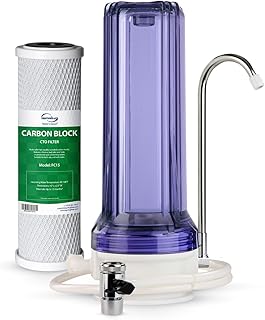
The iSpring CKC1C countertop system offers no-drill installation and is designed to reduce chlorine and odors while extending its filtration to an impressive 10,000 gallons. It connects to most standard kitchen taps and includes hardware for easy setup. The system’s clear housing helps users see when to replace the cartridge, promoting ongoing filtration without guesswork.
Best for: renters or homeowners who cannot modify plumbing with a faucet-mounted unit. Better for temporary or flexible filtration in multiple kitchens. Limitation: countertop space and height may influence compatibility with certain sinks or cabinets.
Buying Guide: How To Choose Between Faucet And Pitcher Filtration
Key questions help determine the right option for you:
- How important is immediate filtered water at the tap versus portability and no-permit installation?
- Is lead reduction a primary concern, or are you mainly concerned with chlorine and taste?
- Do you want long-lasting cartridges and clear replacement indicators?
- Is countertop or under-sink space limited, or do you rent and need non-permanent solutions?
- How much water do you typically filter per day, and does your budget support ongoing cartridge purchases?
Practical recommendations:
- Best for built-in convenience and steady use: faucet-mounted systems like PUR Plus Variants provide on-demand filtered water with clear indicators and solid lead-reduction capabilities.
- Best for portability and space flexibility: a pitcher such as ZeroWater offers easy transport and measurable water purity via TDS testing.
- Best for renters or non-permanent setups: countertop options like iSpring CKC1C provide solid filtration without altering plumbing.
Frequently Asked Questions
- Do faucet-mounted filters remove lead? Yes, several PUR faucet-mounted filters are certified to reduce lead along with other contaminants.
- Is a pitcher better than a faucet filter for taste? Pitchers can improve taste and allow for testing water purity, but faucet filters provide instant filtered water at the tap.
- How often should I replace the cartridge? Most models indicate replacement at around 3 months or after filtering a defined gallon amount, but follow the device’s indicator and manufacturer guidelines.
- Can I install a faucet filter on any sink? Most faucet filters are designed for compatibility with standard faucets, especially those with external aerators; some installations may require adapters.
- Are countertop systems a good alternative to faucet filters? Countertop systems avoid plumbing changes and can offer long cartridge life and strong chlorine reduction, but require counter space and a place to fit the unit.
- Do I need to test water quality before choosing a filter? If you have concerns about contaminants beyond chlorine and lead, consider a filter with certified reduction of additional substances or a TDS meter for ongoing monitoring.