Best Traditional Glass Fermenting Jars for Homemade Pickles and Sauerkraut
Answering the question for home cooks and DIY fermenters: traditional glass fermenting jars offer clear visibility, reliable water-seal premade lids, and simple handling for small to medium batches. They’re best for beginners who want easy monitoring, families who ferment weekly, and hobbyists who value classic glass to monitor color and texture changes. Below are five well-suited options, with notes on who each jar serves best and practical considerations to help you choose.
Summary of top picks:
| Product | Brand | Capacity | Best For |
|---|---|---|---|
| Fermentation Jar, 2.5 Liter Glass Pickle Jar | ETITSA Store | 2.5 L (0.66 gal) | Small to midsize families; visual fermenting; general pickling |
| Sichuan Pickling Jar, 4.5 L Glass Fermentation Crock | Urban Trend Store | 4.5 L (155 oz) | Larger batches; traditional burp-lid design for kimchi/sauerkraut |
| Vencer 2.5 Liter Traditional Glass Fermenting Jar | Vencer Store | 2.5 L | Clear view and inner airflow control; easy observer |
| Masontops Complete Mason Jar Fermentation Kit | Masontops Store | Kit for 4 wide-mouth jars | Starter kit; multiple jars with airlocks and weights |
| Glass Pickle Jar 2.5L Fermentation Jar | Unknown (Glass Jar Brand) | 2.5 L | Daily home use; transparent design with airlock |
Fermentation Jar With Water Seal Lid, 2.5L

This glass pickle jar offers a clear view of the entire fermentation process, letting you monitor changes in color and texture. It uses a water-seal lid to maintain an anaerobic environment and minimize odors. Capacity is 2.5 liters, suitable for families of 2–5. Best for small-batch pickles, sauerkraut, kimchi, and even home wine preparations. A limitation is that glass jars require careful handling to avoid chips and cracks during long fermentations.
Sichuan Pickling Jar, 4.5 L Glass Fermentation Crock
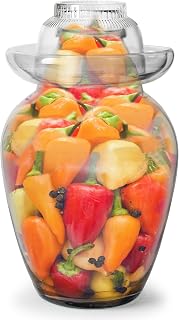
This traditional Chinese fermentation jar uses a burp lid to vent gases while keeping air out, helping to preserve vegetables like onions, beans, cabbage, and peppers without artificial preservatives. The 4.5 L capacity makes it well suited for families or small communities. A caution: the burp lid system can require occasional maintenance, and thicker glass may be heavier to handle.
Vencer 2.5 Liter Traditional Glass Fermenting Jar

With thickened, high-quality glass and clear visibility, this jar helps you track brine levels and fermentation progress easily. A pressed vegetable stone inner cover design helps minimize air contact with the kimchi, potentially extending freshness. Best for single-batch kimchi or sauerkraut where you want reliable observation. Limitation: material details on food safety certifications are not specified in the listing.
Masontops Complete Mason Jar Fermentation Kit

This kit converts four wide-mouth mason jars into fermentation vessels. It includes four Pickle Pipe lids, four fermentation weights, an Acacia Packer Tamper, and a recipe book. It’s ideal for households wanting multiple jars and a complete prototyping set. Choose this if you want a ready-to-use system; avoid if you only need a single jar setup due to extra components and cost.
Glass Pickle Jar 2.5L With Water Seal

This transparent 2.5 L jar includes an airlock lid that releases fermentation gases while preventing external air and odors from escaping. Its clear glass makes it easy to watch progress and the lid design simplifies adding or removing ingredients. Best for daily home use; has a practical limit if you need larger batches for family gatherings.
Buying Guide: How To Choose A Traditional Glass Fermenting Jar
- Capacity and batch size: Choose a jar that matches your typical batch size. 2.5 L jars suit 2–5 people; 4.5 L is better for larger batches or kimchi projects.
- Lid design: Water-seal versus airlock burp lids affect odor control and gas release. Consider whether you prefer a traditional burp mechanism or a modern water seal for easy maintenance.
- Glass quality and clarity: Thicker, clear glass helps you monitor texture and color without opening the jar, reducing contamination risk.
- Material safety and care: Ensure glass is food-grade and free from cracks or chips. Handle with care during cleaning and fermentation.
- Accessory kits: Starter kits provide lids, weights, and tamper tools that speed up fermenting and recipe experimentation.
- Maintenance and replacements: Some lids or gaskets require periodic checks or replacements. Evaluate ease of replacement parts when selecting a jar.
- Cleaning practicality: Jars with wide mouths are easier to clean and refill. Consider whether you need to pour brine or add ingredients comfortably.
FAQ
- What is the main advantage of a water-seal lid? Answer: It maintains an anaerobic environment and reduces odors, helping to preserve vegetables without contamination from outside air.
- Can I reuse these fermentation jars for wine or brines? Answer: Yes, many jars are designed for multiple uses including wine brewing and pickling, as long as you clean and sanitize properly.
- Is 2.5 liters enough for a family of four? Answer: It can be, depending on how often you ferment and the types of vegetables; consider a larger 4.5 L option for frequent or larger batches.
- Should I start with a kit or a single jar? Answer: A starter kit is convenient for beginners to access essential lids and weights, while a single jar suits those experimenting with one recipe at a time.
- Are glass jars safe for kimchi fermentation? Answer: Yes, glass is inert and non-reactive, which helps preserve flavor when used with food-grade brines and correct lid design.
- What should I do if the jar cracks? Answer: Stop using the jar immediately, replace the jar, and inspect lids and weights for damage to prevent contamination.