Best Leave-in Probe Thermometers for Grilling and Smoking
Find the right leave-in probe thermometer to monitor meat without constant checking. This guide highlights five reliable options suited for backyard BBQ, smoking, and oven roasts. Each product is evaluated for accuracy, range, ease of use, and practical limitations to help you choose confidently.
Summary of selected products:
- TempPro TempTrack Large LCD Digital Meat Thermometer (TempPro Store) – dual functionality with preset USDA temps and up to 99:59 timer.
- ThermoMaven Sub-1G Smart Wireless Meat Thermometer (ThermoMaven Store) – long-range wireless with stand-alone base and high-precision sensors.
- Instant Read Dual-Probe Digital Meat Thermometer (Vuwwey Store) – fast reads in 3 seconds with backlit display and calibratable probe.
- AWLKIM Analog Leave-In Oven Safe Dial Thermometer (AWLKIM Store) – battery-free, oven-safe up to 500°F with visible USDA targets.
- TempPro TempTrack Digital Cooking Thermometer with Dual Probes (TempPro Store) – dual-probe for simultaneous meat and grill monitoring with USDA presets.
TempPro TempTrack Large LCD Digital Thermometer

Best for: dedicated meat grilling and smoking setups with preset USDA temperatures. TheTempPro device includes a programmable timer and alert features, making it ideal for cooks who want a set-and-forget method with precise doneness targets. The wide temperature range (32–572°F) supports everything from candy to roasts.
Why chosen: It combines high heat tolerance with a clear digital readout and a robust alarm system. The ability to reset preset temps lets you tailor guidance to your taste while keeping standard USDA guidelines within reach. A potential limitation is that some users may need a separate timer if they require more complex cooking schedules.
ThermoMaven Sub-1G Smart Wireless Thermometer

Best for: cooks who want long-range wireless monitoring and hands-free socializing during cook sessions. The smart display base shows readings in real time, and Sub-1G connectivity provides substantial range, which is helpful for large grills or outdoor gatherings.
Why chosen: The six-sensor, ±0.5°F accuracy offers consistent results, and the standalone base reduces dependence on a smartphone. A caution: connectivity can be affected by obstructions or thick walls, which may limit range in some setups.
Instant Read Digital Dual-Probe Thermometer

Best for: quick, simultaneous monitoring of two different foods or zones, such as two cuts of meat or meat plus grill temperature. The dual-probe setup reduces the need to swap probes during cook time.
Why chosen: It delivers fast readings (about 3 seconds) with a large backlit display, aiding visibility in bright or dim environments. The main limitation is calibration variance that some users notice over time; recalibration helps maintain accuracy.
AWLKIM Analog Oven Safe Dial Thermometer
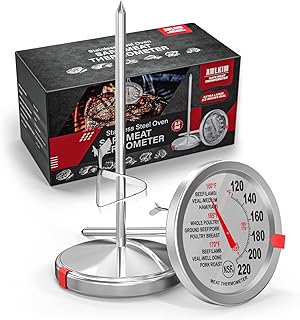
Best for: bakers and traditional roasts who prefer a battery-free, simple dial thermometer visible through oven glass. The always-ready design suits long, unattended cooking sessions.
Why chosen: The 2.5-inch dial with large numerals and USDA target zones is easy to read without opening the oven. A potential limitation is the lack of digital precision and the single, fixed temperature readout; it cannot log trends or provide precise temperature alerts.
TempPro TempTrack Digital Dual-Probe Thermometer

Best for: cooks who need precise dual-zone monitoring with preset temperatures and a timer for smokers or grills. The two probes allow simultaneous monitoring of meat and grill or two different meats.
Why chosen: The inclusion of USDA presets and a backlit display supports straightforward operation in various lighting. A caution is that some users may require calibration checks if the device is moved frequently between heat sources.
Buying Guide
What should you look for in a leave-in probe thermometer?
Accuracy and response time are essential. Look for sensors with a tight tolerance (often ±0.5°F to ±2°F) and a fast read. Consider whether you need a single probe or a dual-probe design for multitasking.
Is wireless or wired better for you?
Wireless models offer freedom from the grill area and larger homes, but check the range and potential interference. Wired designs provide simplicity and constant power, with less risk of signal dropouts.
What temperature range and presets matter?
Choose a device that covers your cooking style. For meat and poultry, presets based on USDA guidelines are helpful. For candy or frying, ensure the range includes high temps and offers manual override.
Readability and alerts
A backlit display makes readings visible in any lighting. Audible alerts are useful when you are away from the grill, but verify volume and snooze options if you cook loudly or outside.
Durability and accessories
Heat resistance, probe length, and wire durability matter for long cooks. Some models include a stand or base, which can simplify placement on a countertop or table during a party.
Maintenance and calibration
Analog thermometers are durable but may require calibration checks over time. Digital models with calibration features help maintain accuracy across uses. Keep probes clean and dry after use to extend life.
Quick reference table
| Product | Best For | Key Benefit | Limitations |
|---|---|---|---|
| TempPro TempTrack Large LCD | Meat grills and ovens | USDA presets, timer, high heat tolerance | Preset edits required for custom tastes |
| ThermoMaven Sub-1G | Large outdoor cooks | Long-range wireless, precision sensors | Potential signal obstruction |
| Instant Read Dual-Probe | Two temps at once | 3-second readings, backlit display | Calibration drift possible |
| AWLKIM Analog Dial | Bakers and roast veterans | Battery-free, oven-safe to 500°F | Limited to analog readouts |
| TempPro Dual-Probe | Dual-zone grilling | Two-probe monitoring, USDA presets | Mobility may affect accuracy |
How to use a leave-in probe thermometer effectively
Insert the probe before cooking begins and place the display where you can read it easily. Set appropriate alerts and presets, then monitor progress as the food cooks. Recheck temperatures toward the end of cooking to confirm safe doneness.
Maintenance tips
Clean probes after use with warm, soapy water; avoid submerging the entire device if it isn’t water-resistant. Periodically check calibration with ice water or follow the manufacturer’s recommendations. Store in a dry place to prevent corrosion.
FAQ
- Do leave-in thermometers work for both meat and candy? Yes, many models cover a broad range of temperatures suitable for meat, grilling, and candy making. Ensure the device you choose supports your target ranges.
- Is a dual-probe thermometer worth it? For multitasking cooks, yes. It lets you monitor two temperatures simultaneously without swapping probes, saving time and reducing guesswork.
- Are wireless thermometers reliable for large outdoor areas? They can be, but range varies by model and environment. Choose a device with a proven base or strong signal and consider obstacles like walls or metal barriers.
- Do analog thermometers require batteries? No. Analog models run without batteries, offering a simple, maintenance-light option, though with fewer features than digital models.
- How accurate are these thermometers? Accuracy varies by model. Look for ±0.5°F to ±2°F depending on the unit and calibration practices you follow.