Best Ice Cream Maker Self Freezing for Home Use in 2026
Answer: Self-freezing ice cream makers eliminate the need for pre-frozen bowls, delivering convenient, on-demand frozen desserts for home kitchens. This guide highlights five top options ideal for different kinds of buyers, from quick-crunch gelato lovers to family-friendly batch makers. If you want no-fuss operation, look for built-in compressors and automatic modes. If you prefer compact designs for small spaces, a vertical or compact model may fit best. The table below compares the featured products at a glance.
| Product | Best For | Key Benefit | Limitations |
|---|---|---|---|
| 4-in-1 Compressor Ice Cream Maker (1.0Qt) | Small households, quick treats | No Pre-Freezing, yogurt option | Smaller batch size |
| Premium Automatic Single Serve (1.2 Pint) | Independently crafted portions | Smart auto-stop, keep-cool | Smaller capacity |
| Whynter ICM-201SB | Families wanting larger batches | Built-in compressor, no pre-freeze | Bulky footprint |
| Whynter ICM-200LS | Versatile cooling options | Pro-grade reliability, timer | Still sizable |
| Whynter ICM-128WS | Compact spaces, everyday use | Reliable self-freezing, timer | Smaller capacity |
4-in-1 Compressor Ice Cream Maker (1.0Qt)

4-in-1 self-freezing design with yogurt making option; compact vertical form for small kitchens.
Product Details
- Self-freezing capability
- 1.0-quart capacity
- Includes yogurt making mode
Best for: small households or those who want a compact, all-in-one option for ice cream, gelato, sorbet, and yogurt. Choose this if space is at a premium and you enjoy experimenting with flavors.
Caution: Small batch size means multiple batches for larger gatherings.
Premium Automatic Single Serve Semi-Conductor Ice Cream Maker

No pre-freezing required with thermoelectric self-cooling. Soft and firm modes, 6-hour keep-cool, and a compact 1.2-pint capacity make this a convenient pick for single servings.
Key Features
- No Pre-Freezing Required
- Soft (1.5H) or Firm (2H) mode
- Automatic keep-cool for up to 6 hours
Best for: individuals or small households who want quick, single-serving portions with adjustable textures. Choose this if speed and simplicity matter more than batch size.
Caution: Limited quantity means it’s less suitable for entertaining or larger families.
Whynter ICM-201SB 2.1 Qt Upright Ice Cream Maker

Award-winning, built-in compressor, no pre-freeze required, and a stainless steel design suitable for busy households.
Why this stands out
- Built-in compressor for continuous use
- Up to 2.1 quarts per batch
- BPA-free churn blade
Best for: families or hosts who regularly prepare larger batches. Choose this if you want a robust machine that can run repeatedly without pre-freeze prep.
Caution: Higher upfront size and weight may require dedicated storage space.
Whynter ICM-200LS 2.0 Qt Self-Freezing
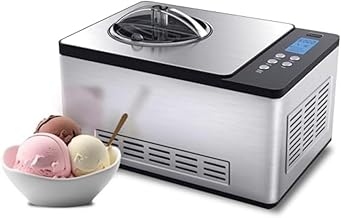
Pro-level reliability with a built-in compressor and timer, designed for versatile frozen treats with no pre-freeze.
Key Points
- Self-freezing technology
- Large 2-quart capacity option
- Timer helps manage multiple batches
Best for: households that want a dependable machine capable of producing larger batches with consistent texture. Choose this if you value a durable, proven design.
Caution: It may be larger than compact countertop models.
Whynter ICM-128WS 1.28 Qt Compact

Compact, white model with built-in compressor and LCD display for easy operation. Suitable for smaller kitchens or quick, everyday treats.
Highlights
- Built-in compressor; no pre-freeze
- 1.28-quart capacity
- LCD display and timer
Best for: apartment dwellers or households needing a space-saving option without sacrificing self-freezing convenience. Avoid this if you regularly need very large batches.
Buying Guide
- What capacity do you need? Consider batch size and frequency of use. Small families may prefer 1.0–1.5 quarts; larger households may opt for 2.0 quarts or more.
- Is a built-in compressor important? Self-freezing models with compressors allow continuous use without pre-freezing bowls, ideal for frequent makers.
- Texture and versatility: Do you want soft-serve, gelato, sorbet, or hard ice cream options? Some models include soft and firm modes or specialized settings.
- Space and design: Do you prefer compact vertical designs or larger upright machines? Choose based on counter space and storage.
- Ease of use: Look for auto-stop sensors, keep-cool features, and clear displays for straightforward operation.
- Maintenance: Check for BPA-free components and ease of cleaning in churn blades and bowls.
Final considerations
For entertainment-worthy batches, Whynter models with larger capacities are strong contenders. For quick single servings, the Premium Automatic Single Serve model offers fast results with texture control. If space is at a premium, the 1.0–1.28 quart options provide solid performance in a smaller footprint. When choosing, balance batch size, space, and desired dessert textures to select the best self-freezing ice cream maker for your kitchen.
FAQ
- How does a self-freezing ice cream maker work?
Most use a built-in compressor to freeze and churn ingredients without pre-freezing a bowl.
- Do I need to pre-chill ingredients?
For best texture, chilling ingredients 2–4 hours can help achieve a creamier result, though some models churn effectively with room-temperature mixtures.
- Can these machines make sorbet and gelato?
Yes, many models are optimized for gelato, sorbet, and soft-serve in addition to standard ice cream.
- Is a larger capacity better?
Yes if you frequently serve groups; otherwise, a smaller capacity saves counter space and energy.
- Are these machines noisy?
Most self-freezing units produce moderate noise during operation; check product specs for decibel ranges.
- What’s the maintenance like?
Typically involves cleaning the churn blade and any removable components; ensure BPA-free materials when possible.