Best Japanese Santoku Knives for Precision Cooking and Durability 2025
Japanese Santoku knives are celebrated for their versatility and sharpness, ideal for slicing, dicing, and chopping a variety of foods with precision. Below is a summary table featuring some of the best Japanese Santoku knives available, perfect for home cooks and professionals alike.
| Product | Brand | Blade Material | Blade Length | Handle Material | Features |
|---|---|---|---|---|---|
| imarku Chef Knife 7 Inch Ultra Sharp Santoku Knife | imarku | 7Cr17Mov Japanese HC Stainless Steel | 7 inch | Not specified | Hollow edge design to reduce sticking, rust resistant, ultra-sharp edge |
| HOSHANHO 7 Inch Japanese Chef Knife | HOSHANHO | 10Cr15CoMoV High Carbon Stainless Steel | 7 inch | Ergonomic African Pakkawood | Triple-layer laminated steel, double-sided groove, ergonomic handle |
| FAMCÜTE Santoku Knife 7 inch Hand Forged | FAMCÜTE | 9CR18MOV High Carbon Steel (5 layers) | 7 inch | Rosewood | Advanced forging, corrosion resistant, ergonomic handle |
| MITSUMOTO SAKARI 7 inch Japanese Santoku Chef Knife | MITSUMOTO SAKARI | 3 Layers 9CR18MOV High Carbon Steel | 7 inch | Rosewood (summer sourwood) | Hand forged, ultra-thin blade, ergonomic octagonal handle |
| imarku Santoku Knife Chef Knife 5 inch Ultra Sharp | imarku | German High Carbon Stainless Steel SUS440A | 5 inch | Ergonomic Pakkawood | Anti-stick design, ultra-sharp edge, improved maneuverability |
imarku Chef Knife 7 Inch Ultra Sharp Santoku Knife

The imarku 7-inch Santoku knife offers a professional-grade kitchen tool with a blade made from 7Cr17Mov Japanese HC stainless steel that resists rust, corrosion, and discoloration. Its ultra-sharp hand-polished edge angles between 15-18 degrees per side provide excellent sharpness for slicing, dicing, mincing, and chopping. The knife’s hollow edge design creates air pockets to reduce food sticking, improving cutting efficiency in the kitchen. With a thickness of 2.5mm, it balances sturdiness with sharpness, making it suitable for both home cooks and restaurant chefs.
HOSHANHO 7 Inch Japanese Chef Knife with Pakkawood Handle

Made from high-end Japanese 10Cr15CoMoV steel with triple-layer laminated construction, the HOSHANHO 7-inch Santoku knife features a hardness rating of 62HRC that ensures long-lasting sharpness and durability. It has a double-side groove design to reduce cutting resistance and prevent food from sticking to the blade. The ergonomic handle is crafted from durable African Pakkawood that resists cracking caused by thermal expansion, offering optimum comfort and control during prolonged use. The 15-degree sharpened blade angle contributes to precise thin cuts.
FAMCÜTE Santoku Knife 7 inch Hand Forged High Carbon Steel

This FAMCÜTE 7-inch Santoku knife is a hand-forged masterpiece made with 5 layers of 9CR18MOV high carbon steel, combining traditional Japanese forging techniques with modern tech. Featuring a 60-day meticulous production process, the blade gains improved hardness of HRC 62, excellent corrosion and rust resistance, and sustained sharpness. The ergonomic rosewood handle is lightweight and sturdy to reduce hand fatigue. This knife is designed for prolonged use without frequent sharpening, perfect for avid cooks.
MITSUMOTO SAKARI 7 inch Japanese Santoku Chef Knife with Rosewood Handle

The MITSUMOTO SAKARI 7-inch santoku knife boasts a traditional hand-forging technique combined with modern technology. Made from 3 layers of 9CR18MOV high carbon steel, its ultra-thin blade maximizes flavor release and precision cutting. The handle is constructed from durable rosewood sourced from Southeast Asia, ergonomically shaped with an octagonal design to reduce wrist tension and provide balance. This knife is well-suited for chefs seeking both craftsmanship and performance.
imarku Santoku Knife Chef Knife 5 inch Ultra Sharp With Pakkawood Handle
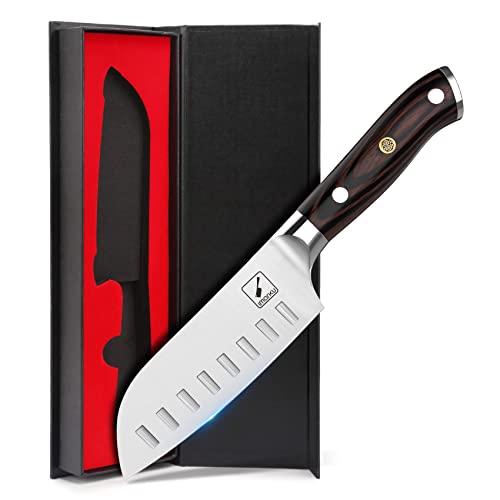
This imarku 5-inch Santoku knife uses German SUS440A high carbon stainless steel offering excellent resistance to rust and corrosion. Its blade features a unique anti-stick food design which reduces cutting friction and prevents food from sticking while slicing. The handle is made from ergonomic Pakkawood, providing a firm and comfortable grip ideal for precision tasks. This shorter blade maximizes maneuverability and accuracy, making it an excellent choice for detailed kitchen work.
Buying Guide for Japanese Santoku Knives
Choosing the best Japanese Santoku knife requires considering various factors to match your cooking needs. Below are key aspects to evaluate before making a purchase.
Blade Material and Construction
Japanese Santoku knives are typically made from high carbon stainless steel or layered Damascus steel. Look for steel types such as 7Cr17Mov, 10Cr15CoMoV, or 9CR18MOV, which offer a great balance of hardness, corrosion resistance, and edge retention. Multi-layered blades combine durability with sharpness. The blade thickness also affects the cutting experience: thinner blades deliver precision slicing, while thicker blades ensure robustness for tougher tasks.
Blade Edge and Sharpness
Sharpness is essential for efficiency and clean cuts. Most quality Santoku knives feature a hand-polished edge with an angle between 12-18 degrees per side. Some blades incorporate hollow or scalloped edges to reduce food sticking during use, enhancing cutting speed and ease.
Blade Length and Design
Santoku knives commonly measure 5 to 7 inches long. A 7-inch blade is versatile for most kitchen tasks, while a 5-inch blade offers superior maneuverability and control, especially in tight spaces or for detailed work. Consider the blade curvature as well; some have a slightly curved edge suited for rocking cuts, while others have a straighter edge best for slicing.
Handle Material and Ergonomics
Comfort and grip are crucial for prolonged cutting sessions. Handles made from rosewood, Pakkawood, or other hardwoods provide durability and resistance to moisture. Ergonomic shapes like octagonal or contoured handles reduce wrist fatigue and offer a balanced feel. Some handles have special treatments to resist cracking and wear.
Maintenance and Durability
Higher-end Japanese Santoku knives often require more careful maintenance to preserve the blade’s sharpness and prevent rust. Look for knives that come with anti-rust coatings or vacuum nitriding processes. Additionally, consider ease of sharpening and whether the knife retains sharpness over time with regular use.
Additional Features
- Hollow Edge or Scalloped Blade: Helps reduce food sticking.
- Blade Thickness: A thinner blade offers precision; thicker blades offer strength.
- Packaging: Some knives include protective cases or gift boxes, ideal for gifting.
By balancing these factors based on your specific kitchen needs, you can select the best Japanese Santoku knife that enhances your cooking performance and longevity.